Mon to Sat, 7:00am to 7:00pmNairobi, Kenya (cleaning clients countrywide)

+254 184 379 590info@kejapalcleaners.co.ke

Business and hygiene

How Often Should You Clean a Water Tank? A Guide for Kenyan Homes

How often to clean a water tank depends on your water source, the tank type and the climate. For most Kenyan homes, the answer is every six months, but borehole, bowser and rainwater tanks need cleaning more often. This guide explains why, the signs to watch for and what a proper tank clean involves.

Technician cleaning inside a plastic tank, showing how often to clean a water tank

Quick answer

Clean a tank on mains water every six months, and a tank fed by a borehole, bowser or rainwater every three to four months. Clean it straight away if the water smells, looks cloudy, has particles or after a flood or repairs. A proper clean drains, scrubs, rinses, disinfects and flushes the tank, then checks the lid and inlets.

Most Kenyan homes and businesses store water in tanks, either on a stand, on the roof or underground. Stored water feels clean because it looks clear from the tap. However, inside the tank, silt settles at the bottom, slime grows on the walls and insects or leaves can get in through gaps. Over time, that affects the taste, the smell and the safety of the water you use for cooking, washing and sometimes drinking. So how often should you clean a water tank? This guide gives a clear answer.

How often to clean a water tank

The short answer

For a home on mains water from the county supplier, clean the tank every six months. For a tank fed by a borehole, a water bowser or rainwater, clean it every three to four months. In addition, clean it straight away if you notice any warning signs, after floods or after plumbing repairs. That is the simple rule for how often to clean a water tank in Kenya.

Water hygiene

Why the water source matters

Different sources bring different problems. Mains water is treated, but pipes carry some sediment, and the treatment fades in a tank over time. Borehole water often carries fine sand, iron or minerals, which settle as sludge. Bowser water depends on where the bowser filled up, so quality varies from load to load. Rainwater carries dust, leaves and bird droppings from the roof. Therefore the more variable the source, the more often you need to clean the tank.

Water sourceHow often to clean
Mains supplyEvery 6 months
BoreholeEvery 3 to 4 months
Bowser or truck deliveryEvery 3 to 4 months
Rainwater harvestingEvery 3 to 4 months, plus gutters before the rains
Schools, hotels, hospitalsEvery 3 to 6 months, on a written schedule

Water hygiene

Signs you should clean a water tank now

Whatever the schedule, clean the tank straight away if you notice any of these:

  • water that smells of eggs, earth or mould;
  • cloudy, brown or yellow water from the taps;
  • sand, particles or flakes in the water or in sinks;
  • slime or a green film on the inside of the tank;
  • insects, frogs or leaves inside the tank;
  • a cracked or missing lid;
  • stomach upsets in the household with no other clear cause.

If anyone in the home is unwell, see a doctor first. Then clean the tank, because stored water can carry germs. The World Health Organization publishes guidance on safe household water storage.

How often to clean a water tank: technician scrubbing the inside of a home tank
Slime and silt build up inside even when the water looks clear from the tap.

Water hygiene

How often to clean a water tank in different climates

Climate affects how fast tanks get dirty. For example, warm, humid areas such as Kisumu and the coast encourage algae and slime, so tanks need cleaning more often. In dusty areas such as Kitengela, Machakos and the Rift Valley, dust blows into tanks through loose lids. Meanwhile, cooler highland areas see slower algae growth, but rainwater tanks still collect leaves and silt. Therefore adjust your schedule to your area as well as your water source.

Water hygiene

What a proper tank clean involves

Cleaning a tank properly is more than rinsing it out. Our technicians follow these steps:

  1. Plan. First, agree a time, and store enough water in buckets for a few hours.
  2. Drain. Next, drain the tank and remove the sludge from the bottom.
  3. Scrub. Then scrub the walls, floor and lid with brushes to remove slime and film.
  4. Rinse. Rinse thoroughly, and remove the dirty water.
  5. Disinfect. Apply a suitable disinfectant at the correct strength and contact time.
  6. Flush and refill. Flush away the disinfectant, refill the tank and run the taps.
  7. Check. Finally, check the lid, the inlet and the overflow for gaps where dirt or insects can enter.

For a typical 1,000 to 5,000 litre tank, this takes two to four hours. See our water tank cleaning page for details.

Water hygiene

Can you clean a water tank yourself?

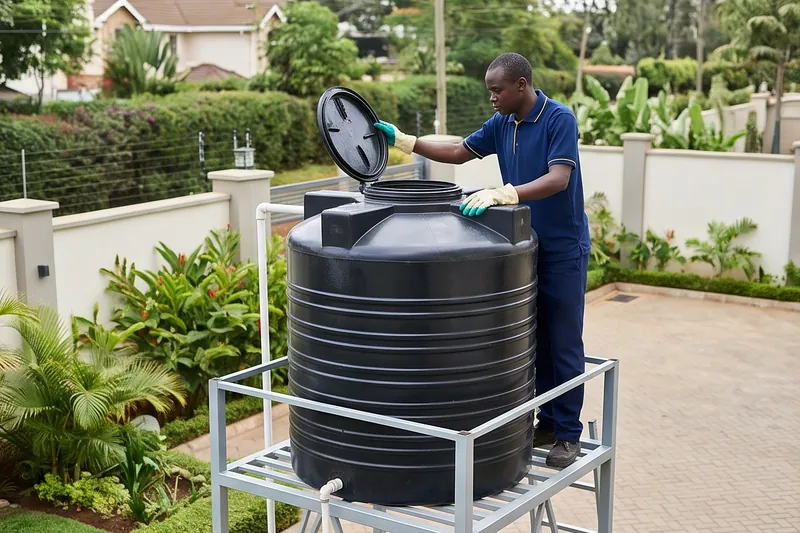
Small tanks on the ground can be cleaned at home with care. However, there are real risks. Tanks on high stands or roofs mean working at height. Underground tanks are confined spaces, where fumes and low oxygen can be dangerous, so they should never be entered without proper training and equipment. Disinfectants must also be used at the right strength and flushed out fully. For these reasons, most families book a professional clean, especially for tanks above ground level or below it.

Water hygiene

Keeping the tank clean between visits

A few habits help the tank stay cleaner for longer:

  • keep the lid tight and in good condition;
  • fit a mesh over the overflow and vents to stop insects;
  • clean roof gutters before the rains if you harvest rainwater;
  • fit a first-flush diverter, so the dirtiest rainwater skips the tank;
  • keep the area around underground tanks clear of drains and rubbish;
  • choose an opaque tank, which reduces algae growth.

How often to clean a water tank in businesses

Schools, hotels, restaurants, clinics and apartment blocks serve many people, so the stakes are higher. Therefore we recommend a written schedule, with cleaning every three to six months, depending on the source and the use. In addition, keep a simple log of each clean, which helps with inspections and gives residents confidence. For apartment blocks, we can clean several tanks on the same visit. Our commercial cleaning page explains how this works for larger sites.


Drinking water and tanks

Even a clean tank does not guarantee drinking-quality water, because stored water can pick up germs over time. For drinking, many families boil or filter tank water, or buy treated drinking water. If you rely on tank water for drinking, clean the tank on schedule, keep it sealed and treat or filter the water before drinking. For more on water and health, the Ministry of Health provides public information.

Combining tank cleaning with other jobs

Tank cleaning fits well with other cleaning. For example, many families book it with a deep clean of the home, because the home needs fresh water for the clean anyway. Similarly, apartment blocks often combine tank cleaning with common area cleaning and pressure washing. Combining jobs saves on visits and keeps the property in good shape.

A simple yearly plan

If you are unsure how often to clean a water tank, use this plan. On mains water, clean in January and July. On borehole, bowser or rainwater, clean in January, May and September, and check gutters before each rainy season. Put reminders in your phone, so the job never slips. For a reminder from us instead, ask when you book.

Our recommendation

Knowing how often to clean a water tank protects your family’s health and the life of the tank. Most homes need a clean every six months, and homes on boreholes, bowsers or rainwater every three to four months. If it has been longer, or you notice any warning signs, book a clean now. Request a cleaning quote with the tank size and location, and we will reply with a free written quote.

Tank types and what they need

Different tanks age in different ways. For example, plastic tanks on stands are the most common, and they are easy to clean, but sunlight can make thin walls brittle over the years. Concrete and masonry tanks, often underground, can crack and let in groundwater, so check them for leaks during each clean. Steel tanks may rust inside, which stains water and needs attention. Therefore tell us the tank type when you book, so the technician brings the right brushes, products and access equipment.

Support and maintenance

After floods and repairs

In short, any event that could let dirt into the tank is a reason to clean it, whatever the calendar says.

Heavy rains and plumbing work both raise the risk of contamination. After a flood, dirty water can enter underground tanks through cracks or lids, while repairs often send debris and sealant into pipes. In either case, clean and disinfect the tank before using the water again, even if it looks clear. Likewise, flush the pipes by running each tap for a few minutes after the tank is refilled.

Get started

Get your cleaning quote

Tell us what needs cleaning and where, and our cleaning coordinator will call you back within one working day with a free written quote and a time.

  • Clear, itemised written quote
  • Uniformed cleaners who bring their own supplies
  • A clear checklist for every room

Prefer to talk? Call +254 184 379 590

We reply within one working day. Or call +254 184 379 590.

Frequently asked questions

How often should I clean my water tank?

Every six months on mains water, and every three to four months if your water comes from a borehole, bowser or rainwater.

What are signs my water tank needs cleaning?

A bad smell, cloudy or coloured water, particles, slime inside the tank, insects or a damaged lid.

How long does water tank cleaning take?

Two to four hours for a typical 1,000 to 5,000 litre tank, including draining, scrubbing, disinfecting and refilling.

Can I enter an underground tank to clean it?

No, not without training and equipment. Underground tanks are confined spaces where fumes and low oxygen can be dangerous.

Ready for a cleaner space?

Tell us what needs cleaning and where. We will check the job by photos, a video call or a quick visit, send a free written quote and book a time that suits you.

CallWhatsAppAsk usQuote