
Mon to Sat, 7:00am to 7:00pmNairobi, Kenya (cleaning clients countrywide)

+254 184 379 590info@kejapalcleaners.co.ke

Cleaning tips and checklists

How to Remove Stains From a Sofa: A Guide for Fabric, Leather and Suede

Spills happen on every sofa. This guide shows how to remove stains from a sofa safely, starting with the care label, then step by step for tea, food, oil, ink, mud and pet accidents, plus what never to put on upholstery.

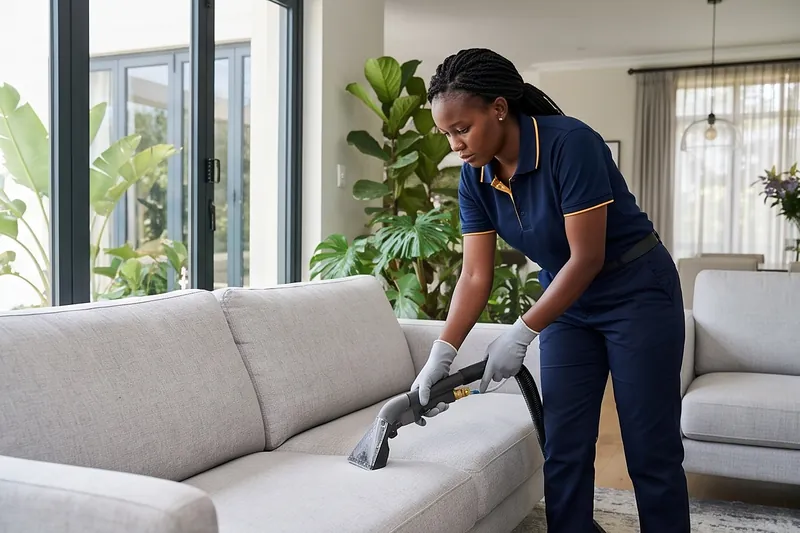
Technician cleaning a fabric sofa, showing how to remove stains from a sofa

Quick answer

Check the care code first: W means water-based cleaners, S means solvent only, W/S means either, and X means vacuum only. Act fast, blot rather than rub, and test any product on a hidden area. Use mild soapy water for most fabric stains, washing-up liquid for grease, and a leather cleaner for leather. Call a professional for large, old or unknown stains.

A sofa is one of the most used items in any home. Children eat on it, guests drink tea on it and pets nap on it. Sooner or later, something spills. The good news is that most stains come out if you act quickly and use the right method. The bad news is that the wrong method can spread the stain, bleach the fabric or leave a water ring that is worse than the original mark. This guide explains how to remove stains from a sofa safely, based on what our upholstery technicians do every day.

How to remove stains from a sofa

Check the care code first

Before you touch a stain, look for the care label, usually under the seat cushions or on the base. It often shows a cleaning code:

CodeMeaning
WWater-based cleaners are safe
SSolvent-based cleaners only, no water
W/SEither water or solvent, used carefully
XVacuum only, call a professional for stains

If there is no label, treat the sofa as delicate. In that case, test every product on a hidden area first, such as the back or under a cushion.

Fabrics and furniture

Golden rules to remove stains from a sofa

  • Act fast. Fresh stains are far easier to lift than dry ones.
  • Blot, do not rub. Rubbing pushes the stain deeper and damages fibres.
  • Work from the outside in. That stops the stain from spreading.
  • Use little liquid. Too much water soaks the foam and leaves rings.
  • Test first. Always try a product on a hidden spot.
  • Never use bleach. It removes colour permanently on most fabrics.
Remove stains from a sofa: technician treating a fabric sofa with extraction
Professional extraction lifts stains and dirt from deep in the fabric and foam.

Fabrics and furniture

How to remove stains from a sofa: common stains

Tea and coffee stains on a sofa

First, blot up as much as you can with a clean white cloth. Next, mix a few drops of mild washing-up liquid in a cup of cool water, and dab it onto the stain with a cloth. Then blot with a dry cloth, and repeat until no more colour transfers. Finally, dab with plain water to rinse, and blot dry. If milk was in the tea, cool water matters, because hot water sets milk proteins.

Food stains on a sofa

Lift solid food off with a spoon, without pressing. Then treat as for tea, with mild soapy water. For tomato or curry stains, which contain oil and colour, work slowly and patiently. You may need several rounds. If a yellow mark remains, a professional can often lift it with extraction.

Remove oil stains from sofa fabric

Oil from food, hair products or skin leaves dark patches, especially on headrests and arms. To treat it, sprinkle a little baking soda or cornflour on fresh oil and leave it for fifteen minutes to absorb, then vacuum. Afterwards, dab with a drop of washing-up liquid in warm water, which breaks down grease, and blot dry. Repeat if needed.

Ink and marker

Ink is one of the hardest stains. On W/S fabrics, dab a little rubbing alcohol on a white cloth and blot the ink, working from the outside in, while changing the cloth as ink transfers. However, never pour alcohol straight onto the sofa, and never use it on S or X codes without testing. For large ink marks, call a professional.

Mud and dust

Let mud dry completely, then brush off as much as you can and vacuum. After that, treat any remaining mark with mild soapy water. Trying to clean wet mud only spreads it.

Pet stains on a sofa

Remove solids, then blot up as much liquid as possible. Next, use an enzyme cleaner made for pet stains, which breaks down the source of the smell. Follow the product instructions carefully, and avoid ammonia, because it smells like urine to pets and may draw them back. If urine has soaked into the foam, a professional extraction clean is the most reliable fix.

Blood

Always use cold water on blood, because heat sets it. Blot with cold water, then with a little mild soapy water, and rinse. Act as quickly as you can.

Chewing gum and wax

Harden gum or wax with an ice cube in a plastic bag, then gently pick it off. For wax, place brown paper over the remaining mark and press briefly with a warm iron, which draws the wax into the paper. Test this on a hidden area first, because heat can damage some fabrics.

Remove stains from a leather sofa

Leather needs a different approach. Wipe spills straight away with a soft, dry cloth. Then use a cleaner made for leather, not soap or household sprays, and condition afterwards to stop cracking. Never soak leather, and avoid baby wipes and alcohol, which dry it out. For ink or dye on leather, see a professional, because home methods often remove the finish.
Suede and velvet

Suede and velvet are delicate. Let spills dry, then brush gently with a soft brush in the direction of the pile. Use a suede eraser for small marks. In addition, avoid water on most suede, because it leaves marks. Velvet often carries an S code, so use only solvent cleaners or call a professional.

Fabrics and furniture

What never to put on a sofa

  • bleach or bleach-based sprays;
  • strong household degreasers or oven cleaners;
  • too much water, which soaks the foam and causes rings and mould;
  • coloured cloths, which can transfer dye;
  • hair dryers on high heat, which can shrink or set stains.

Why water rings appear on a sofa

A light ring around a cleaned spot is common. It happens when water carries dirt from the foam to the edge of the wet area, then dries there. To avoid it, use as little water as possible, blot well and dry quickly with a fan. If a ring forms, lightly dampen the whole cushion panel evenly, then blot and dry it. That way, it dries as one even surface.

When to call a professional

Sometimes it is wiser not to remove stains from a sofa yourself. Some stains are best left to experts. For example, call a professional for large or old stains, unknown stains, ink, dye transfer, urine in the foam, X-coded fabrics, delicate velvet and silk, and any sofa where home cleaning has left rings. Professional upholstery cleaning uses hot water extraction or low-moisture methods matched to the fabric, which lifts stains and dirt from deep in the foam. See our sofa cleaning page for more detail.

Keeping your sofa clean

Prevention is easier than having to remove stains from a sofa later. Vacuum the sofa weekly, including under cushions and in seams. Rotate and plump cushions so wear is even, and keep the sofa out of strong sun, which fades fabric. Throws on favourite seats protect against everyday spills, while a professional clean every six to twelve months removes the dirt that builds up deep in the fabric. In Kenya’s dusty dry season, more frequent vacuuming helps too.

Our advice

Learning how to remove stains from a sofa saves money and keeps your living room looking good. Check the care code, act fast, blot rather than rub and test every product first. If a stain will not budge, or the fabric is delicate, stop and call a professional before you make it worse. To book, request a cleaning quote with a photo of the sofa and the stain. For general product safety, the World Health Organization advises keeping chemicals away from children.

Drying the sofa properly

After you remove stains from a sofa, drying is just as important as cleaning. Damp foam can smell musty and, in humid weather, may even grow mould. So open windows, run a fan and keep people and pets off the cushion until it feels completely dry. In addition, avoid placing the cushion in direct strong sun for hours, because that can fade the fabric. Most small spot cleans dry within two to four hours with good airflow.

A quick stain kit for home

Keep a small kit ready, so you can act the moment something spills. It should include white cloths, mild washing-up liquid, baking soda, an enzyme cleaner for pets, a soft brush and a spray bottle of plain water. Store it in one place, away from children. With the kit at hand, most spills become a five-minute job rather than a permanent mark.

Get started

Get your cleaning quote

Tell us what needs cleaning and where, and our cleaning coordinator will call you back within one working day with a free written quote and a time.

  • Clear, itemised written quote
  • Uniformed cleaners who bring their own supplies
  • A clear checklist for every room

Prefer to talk? Call +254 184 379 590

We reply within one working day. Or call +254 184 379 590.

Frequently asked questions

How do I remove stains from a fabric sofa?

Check the care code, blot the stain, then dab with a few drops of mild washing-up liquid in cool water, blot dry and rinse with a little plain water.

What does the code on a sofa label mean?

W means water-based cleaners, S means solvent only, W/S means either and X means vacuum only.

Can I use bleach on a sofa?

No. Bleach removes colour permanently on most upholstery fabrics.

How do I stop water rings on my sofa?

Use as little water as possible, blot well and dry quickly. If a ring forms, dampen the whole panel evenly and dry it.

Ready for a cleaner space?

Tell us what needs cleaning and where. We will check the job by photos, a video call or a quick visit, send a free written quote and book a time that suits you.

CallWhatsAppAsk usQuote